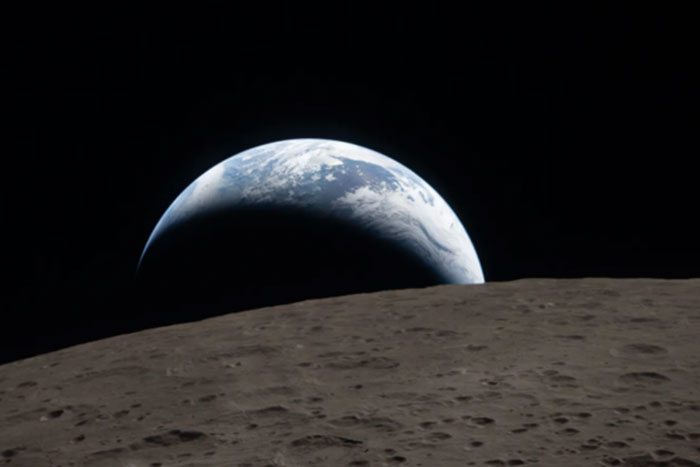
On April 6, 2026, the Artemis II crew swung around the far side of the moon, shattered the Apollo 13 distance record by traveling nearly 253,000 miles from home, and enjoyed front-row seats to an exclusive, off-world solar eclipse. It is a monumental achievement for humanity. But for an Intellectual Property (IP) attorney, watching the Orion spacecraft orbit the lunar surface is further awe inspiring when thinking of all the patents, trade secrets, and other IP involved.
As space exploration transitions from a government monopoly to a booming commercial sector, the legal vacuum of space is rapidly filling with intellectual property considerations. Whether your company is launching rockets or just launching a new app, it is important to consider protecting your most valuable assets.
Patents in Zero Gravity: The Reach of the Law
When the Artemis II crew lost the Earth's signal on the far side of the moon, they were isolated from the planet, but not from its laws. If an astronaut invents a new tool or process while orbiting the moon, who owns it? Under the U.S. Space Act, any invention made, used, or sold in outer space on a space object under the jurisdiction or control of the United States is considered to have occurred within the U.S. for patent purposes.
For inventions created on Earth, the country in which they were invented can impact how patents are filed and whether permissions, in the form of foreign filing licenses, must be obtained from particular jurisdictions. Moreover, the protection offered by a patent extends only to the countries in which the patent was filed, granted, and maintained.
Copyrighting the Cosmos
As a result of the Artemis II mission, the world was treated to a stunning photograph of "Earthset" – our home planet dipping behind the darkened surface of the moon, captured directly through the Orion spacecraft's window. Because Artemis II is a NASA mission, that image is free from copyright restrictions. U.S. copyright law dictates that works created by the federal government are in the public domain. However, as private space companies take to the stars, the rules change. A photograph taken by a private satellite or commercial crew member is immediately protected by copyright the moment the shutter clicks.
Ownership of copyrights is not always intuitive. If you hire a third-party contractor to design your company's logo, write your software, or take your marketing photos, they may own the copyright unless you have a meticulously drafted "work-for-hire" agreement or IP assignment in place.
Trade Secrets on the Launchpad
While some data and findings are shared with the global scientific community, many components inside the Space Launch System (SLS) rocket rely on trade secrets. From proprietary fuel mixtures to manufacturing techniques for heat shields, some innovations are too valuable to publish in a patent application that becomes public record.
Sometimes, the best IP protection is simply keeping the secret, but you must take "reasonable measures" to keep it hidden. If your business relies on proprietary algorithms, customer lists, or manufacturing processes, you need ironclad Non-Disclosure Agreements (NDAs), secure data siloing, and strict employee off-boarding protocols.
Ready for Liftoff?
You might not be building the habitat for the upcoming lunar base, but navigating the IP landscape can often feel just as complex as calculating a lunar trajectory. One misstep, and your competitive advantage could burn up on reentry. Be sure to consult an experienced IP attorney that can build the legal shielding that keeps innovations safe.
Author: Natalie S. Richer, edited by Craig Drachtman